Fall Stucco Crack Check After Monsoon in Scottsdale
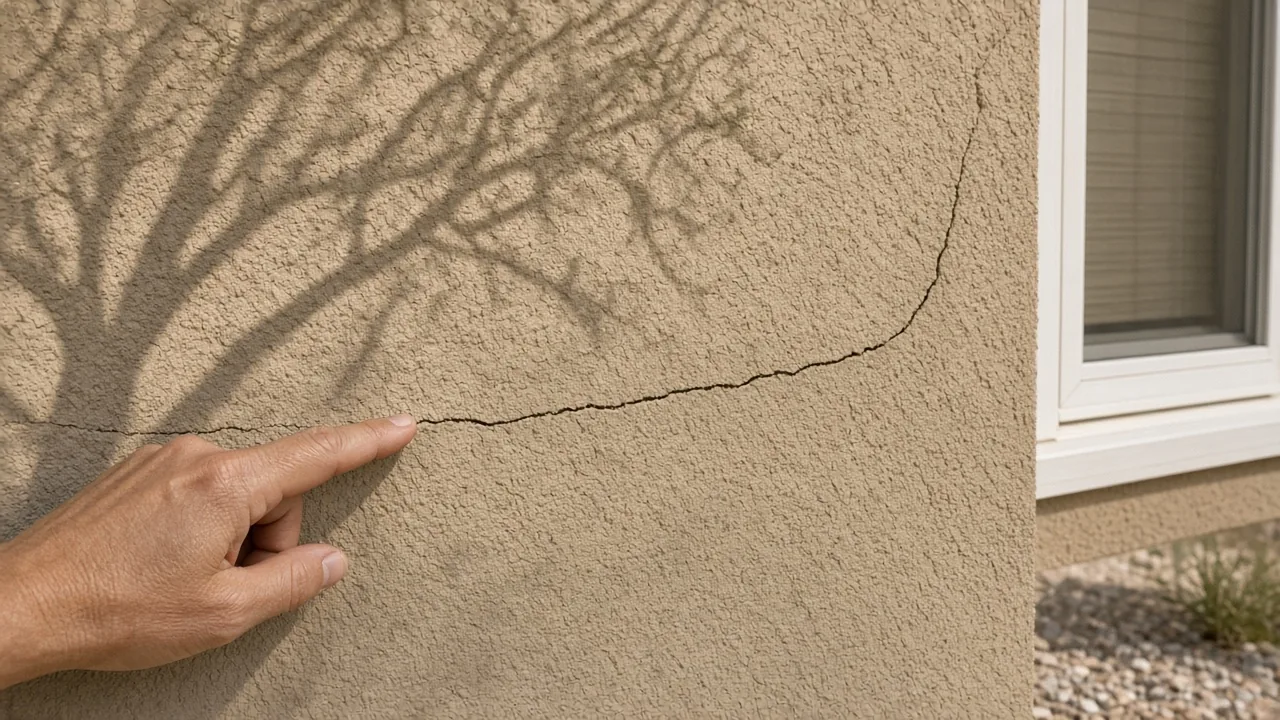
Monsoon season runs through September. By early November the storms have stopped and the walls have had a few dry weeks. That's the useful time to look. Cracks that took on water are easier to see once the dust has settled and you're not guessing in the middle of a storm.
This is a walk-around, not a rebuild plan. For how crack types differ, read when to worry about stucco cracks. The question today is narrower. Patch it this fall or write it down and watch.
Walk it when the light is low
Go out in the morning or late afternoon when the sun hits the wall from the side. Cracks disappear in flat noon light and they show up when a shadow drops into them.
Take your phone. Photograph anything you might argue about later and note which wall it is. A picture from November is better than a memory next July.
Start here:
- South and west walls. They take the sun and they move.
- Corners of windows and doors. Cracks like to start there.
- Parapets and the top of a porch column
- Foam pop-outs and the joint where trim meets the wall
- The base of the wall above the weep screed. A stain there means water sat at the bottom.
- Any spot where a downspout dumped on the wall this summer
Watch these
A hairline crack with no dark edge, no soft spot and no change since the last time you looked is a watch item. Hairline cracks are normal on desert stucco. Heat and cool nights open them. They are not automatically a leak.
Mark them. If the same crack is still a hairline next fall and the coating around it is sound, you watched it for a reason. If it grows, stains or flakes, it moves onto the patch list.
Don't paint over it and call it sealed until you've checked that the stucco under it is still stuck to the wall.
Patch these
Put these on the repair list before the holidays bury them:
- A crack you can see a shadow in, especially if the edges are dark from water
- Stucco that sounds hollow or feels soft when you press beside the crack
- A crack that runs out from a window corner and keeps going
- Staining or bubbles low on the wall
- A pop-out or foam trim joint that has opened enough to see behind it
- Any spot where you watched water run inside the crack during a storm
Caulk is not a repair for a hollow section. It can bridge a small crack that isn't moving. It can't replace stucco that has let go of the wall. Texture has to match or the patch reads as a smear from the street.
That work is stucco crack repair. If you aren't sure which list a crack belongs on, a photo of it is the right thing to send.
Write it down so next fall is easier
Note the date, the wall and what you decided. "South wall, left of the slider, hairline, watch" is enough. Next fall you compare. A crack that stays put is a different crack from one that lengthened after a season.
If the patch list is longer than you want to chase, request a free estimate. We'll look at the walls you flagged and tell you which ones need a patch now and which ones can wait.