Stucco Bubbling on Scottsdale Homes
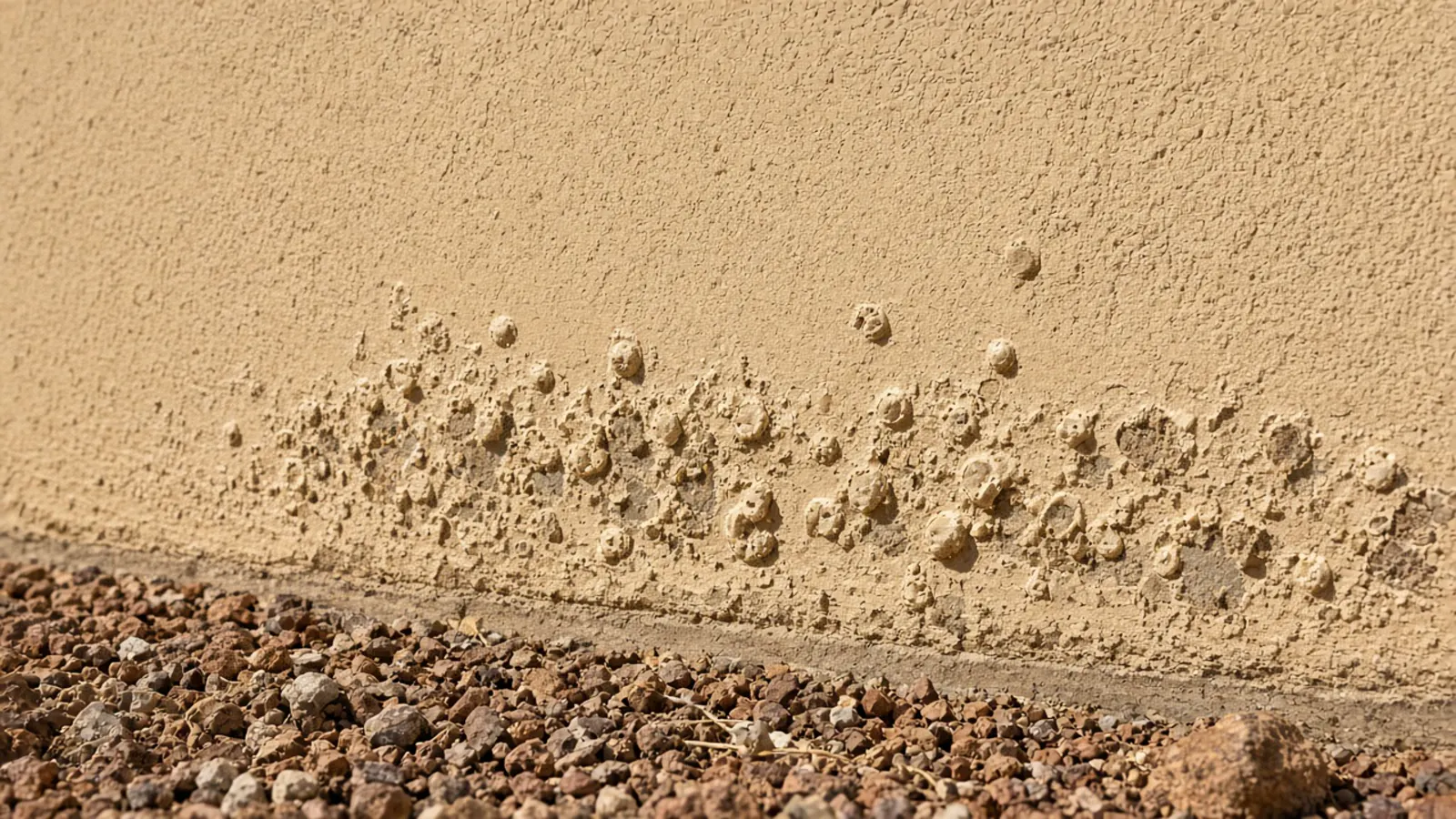
Quick answer: Stucco bubbling in Scottsdale is usually moisture, and it is either a blister in the paint or the stucco itself letting go. If the bubble is in the coating and the wall under it is hard, you repair the film after you stop the water. If the wall sounds hollow or moves, paint will not stick it back.
The two problems look alike from the driveway. They are not the same repair. This page is how we tell them apart on Valley houses, where sprinklers, buried weep screeds and monsoon wetting cause most of the blisters we open up.
Paint Blister or Stucco That Has Let Go
Press around the bubble. Don't punch it.
A coating blister is a raised pocket in the paint or the finish coat. It often tears when you touch it and the paint at the edge is still stuck. The stucco underneath feels hard and it doesn't move. Common reasons are moisture behind the film, painting over chalk or dust, a coat that went on too heavy or a wall that was still damp. The stucco can be sound while the paint is not.
A stucco delamination is a loss of bond. That can be the finish coat leaving the base coat, or the stucco leaving the lath or the block behind it. Tap with a knuckle. A hollow, dull sound, a bulge that moves or stucco that flexes means the bond is gone. Paint, including a thick elastomeric, bonds to whatever it's applied to. If that layer is loose, the new coat lifts with it.
Sto's stucco repair guidance describes blistering of the finish as water getting behind it, from roofs, parapets, windows, joints or the ground. The same note says the stucco itself can come apart if the surface is weak. The remedy they publish starts with the water: find the intrusion and fix it before you patch, or the blister comes back. Then remove the loose finish back to material that is still stuck. If the stucco is weak, take it off to firm material, dampen, patch and texture-match.
White powder is a third look and it isn't a bubble. That's often salts left when water moves through the cement and dries. Don't scrub it and paint the same day without finding why the wall is getting wet.
Where Scottsdale Walls Blister
The bottom two feet. This is the band in the photo on this page: blisters sitting just above the gravel. Sprinklers hit it every day. Turf, planters and rock hold moisture against the stucco after the spray stops. Our sprinkler overspray note is the longer version of that pattern. If the blister map matches the sprinkler pattern, believe the sprinkler.
The weep screed. The metal or plastic edge at the bottom of the stucco is supposed to let water out of the wall. Soil, rock or a slab poured too high can bury it. A buried weep keeps the base of the wall wet and the finish blisters above that line. What the screed is for, and why you don't pack it shut, is in weep screed drainage.
Below a parapet, a scupper or a roof-to-wall joint. Monsoon rain driven by wind gets into joints that a light rain would miss. Blisters in a vertical streak under a parapet cap are a roof or flashing clue. Patching the stucco and leaving the joint open just refills the blister next summer.
Around windows, pipes and old patches. Failed sealant and a patch that never bonded both show up as local blisters, not a whole-wall rash. A patch that sounds hollow was a bond problem from the day it was put on. Coating it again doesn't give it a bond it never had.
What to Do, in Order
- Photograph the pattern. Note whether it sits at the base, under a roof edge or around one window. A photo in low side light shows blisters that noon sun hides.
- Tap and press. Hard and still under a torn film points to the coating. Hollow, soft or moving points to the stucco. Mark the hollow area with tape so the repair is bigger than the one blister you noticed.
- Find the water before you buy paint. Run the sprinklers. Look at the weep line. Look above the stain for a scupper, a parapet or a crack. If the wall is still getting wet, stop there.
- Change the thing that's wetting it. Aim heads off the wall, pull rock and soil off the weep screed and fix the flashing or sealant that is letting monsoon water in. This is the step people skip because the bubble is the part they can see.
- Remove what's loose. Scrape coating blisters back to paint that stays put. If the stucco is crumbly or hollow, remove it to firm material. Don't spread new material over a pocket.
- Let the repair dry and match the texture. A smooth patch on a sand finish shows forever. Color comes after the patch is sound, not before.
- Coat only sound stucco. Elastomeric coatings have a use on hairline cracks that are stable. They are not glue for loose stucco. If someone offers to "encapsulate" a hollow wall, ask them what happens when the loose piece moves.
Bubbling Checklist
- You know whether the wall under the bubble is hard or hollow
- Sprinklers don't hit the stucco on a test run
- The weep screed isn't buried in rock or soil
- You looked above the blister for a parapet, scupper or window joint
- Loose material is removed back to what is still stuck
- The patch is dry before any coating goes on
- Texture is matched, not just painted over
- You're not using a thick coating to hide a hollow spot
- The price you're using is a range from the cost page for the size of the repair, not a guess from a photo
Coating Blister, Delamination or Salts
| What you see | What it usually means | What fixes it | What fails |
|---|---|---|---|
| Paint bubble, hard stucco under it | Moisture or a bad bond in the coating | Stop the water, scrape to sound paint, prime and coat | Painting over the bubble |
| Bulge, hollow tap or stucco that moves | Stucco has lost its bond | Remove loose stucco, patch, then coat | Elastomeric over the loose area |
| Blisters in a band at the base | Sprinklers, grade or a buried weep | Redirect water, uncover the weep, then repair | A patch while the sprinkler still hits |
| Blisters under a parapet or scupper | Water from above | Fix the flashing or joint, then the wall | Stucco repair with the leak left open |
| White powder, no real bubble | Salts from water moving through the wall | Stop the water, then clean and coat | Paint over active salts |
What a Repair Costs Here
We don't price a blister from a photo, because we can't see how far the hollow spot goes until it's open. The ranges we do publish are on the stucco repair cost page and they depend on the work, not on the word "bubble."
A small patch under 2 square feet is $200 to $500. A medium patch of 2 to 10 square feet is $400 to $1,000. A larger section is $8 to $12 per square foot. Monsoon or water-damage repair on that page is $500 to $3,000+. If the bond is gone across a wall, full re-stucco on that page is $8 to $12 per square foot. A coating over sound stucco is a different line item. Elastomeric on that page is $2 to $4 per square foot, or $4,000 to $8,000 for an average home, and it still requires the stucco underneath to be stuck.
Use those ranges as the menu. Don't average them into a single "typical bubble" price. A coating blister the size of your hand is not a whole-wall re-stucco and a hollow wall is not a $200 scrape.
What We Need to See
Bring us the pattern: base of the wall, under the roof or around one opening. Tell us if the sprinklers hit it and if the weep is buried. We'll tap the area and tell you whether you're looking at paint or at stucco that has to come off. If the water is still arriving, we'll say that first.
Got a band of bubbles at the base of the wall? Call (480) 405-4743 and tell us whether the sprinklers reach the stucco.
Frequently Asked Questions
Is stucco bubbling just peeling paint?
Not always. If the film lifts and the wall under it is hard and still, it's often a coating blister. If the stucco sounds hollow or moves, the stucco has lost its bond.
Can sprinklers make stucco bubble?
Yes. Daily spray keeps the base of the wall wet. In Scottsdale that shows up above turf, planters and rock that holds moisture against the stucco.
Should I paint over the bubbles?
No. Paint and elastomeric coatings don't glue loose stucco back to the wall. Stop the water, remove what's loose and repair the stucco before you coat it.
What does a bubbling stucco repair cost?
It depends on how much comes off. On our cost page a small patch under 2 square feet is $200 to $500. A larger section is $8 to $12 per square foot.
What is a weep screed for?
It lets water drain from behind the stucco at the bottom of the wall. Burying it in soil or rock, or packing it shut, traps moisture that can blister the finish.